Skip to Content
On the way to the small village, my old illness relapsed, so I separated from my companions.
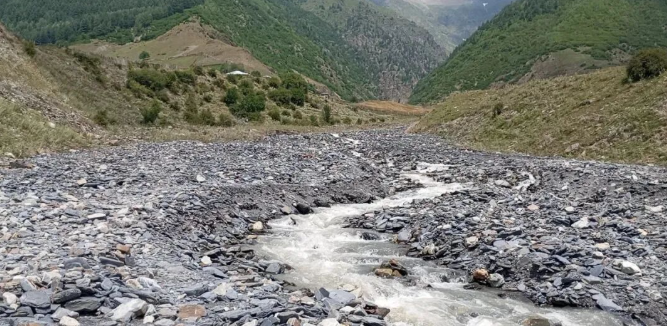
They continued their journey into the mountains while I returned to the town of Mestia.
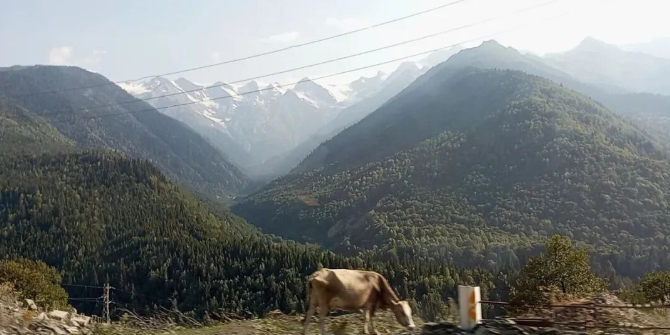
It’s “downtown”, but in fact Mestia is just a small town. Because it is close to the snow-capped mountain hiking route, it is also the starting point for many people to hike.
At that time, I didn’t think of hitchhiking. I planned to walk along the road and riverbank. Dozens of kilometers were regarded as a mountain stroll, which was quite good.
I didn’t expect to meet an old man like that-driving a truck.
The car suddenly stopped, and the old man poked his head out of the window and pointed ahead.
He was speaking Georgian which I couldn’t understand, and I guessed from his gestures that he was asking if I was going to Mestia.
At least the word “Mestia”, pronounced similarly in English and local languages.
I nodded yes and he motioned for me to get in the car.
Of course, I asked the price uneasily, but the old man couldn’t understand, so he mumbled a bunch more. I also tried to explain, but neither of them probably understood the other’s meaning.
But judging by his expression and movements, I guess he was kind enough to drop me.
Because another driver who stopped before talked about the price as soon as he opened his mouth.
When I got on the bus, I realized that I almost made a wrong decision.
I have estimated this distance before, thinking that it can be finished in seven or eight hours, and it is not cold during the day.
But I didn’t expect the kilometers to be on the mountain road, with many uphill and downhill. Simply looking at the distance does not completely correspond to physical exertion.
Originally, I felt a pity for missing the hike, but I felt lucky because of the difficulty of this road-fortunately, I got a ride!
The old man can’t speak English, and I don’t know the local language, so how do I communicate with him?
Actually, this is not my first hitchhiking abroad, nor is it my first successful hitchhiking.
Before Georgia, I had been to Armenia. On the way to Deep Pit Abbey, there is a distance that the bus can’t reach.
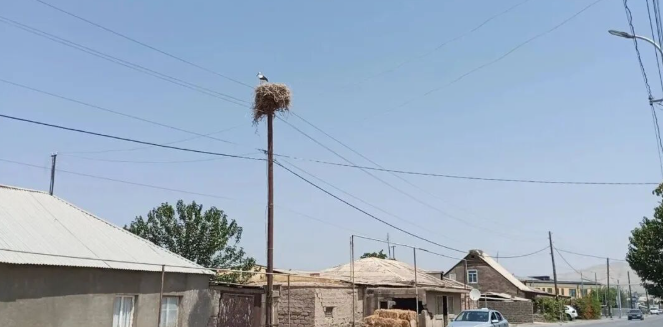
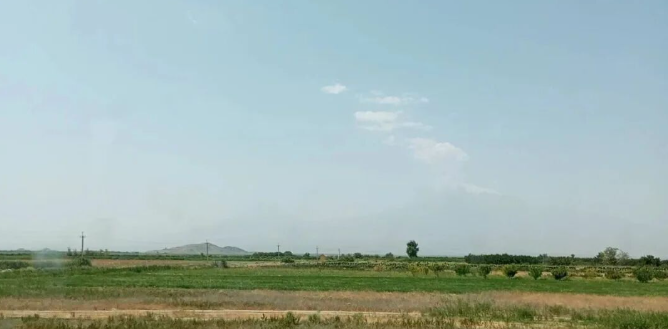
It was very sunny that day, and the surroundings were bare. Occasionally, seeing a bird or two parked on a telephone pole can make people stop happily-for nothing else, it’s too hot to walk down, and I just want to have a rest.
But no matter how far we go, we have to go. There is no public transportation around here, only on your feet.
Just walking a long way, suddenly a car stopped.
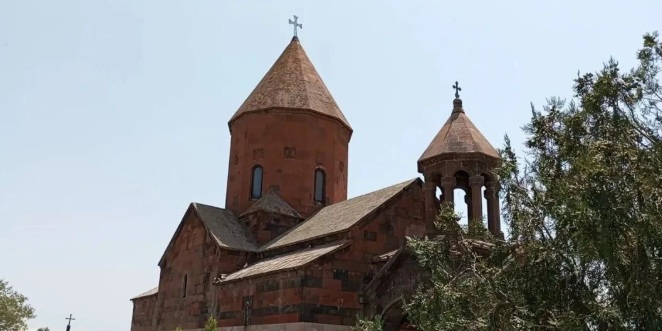
The car drove us to the foot of Abbey Hill. Looking back, the car actually drove away again?
It turns out that the little brother didn’t give us off on the way, but deliberately sent us here.
Beyond the monastery is the snowy mountain of Arala, the legendary place where Noah’s Ark was last anchored-although this mountain is now owned by Turkey.
On the return journey, you also need to walk back and pass by a cemetery. Fortunately, the sun hadn’t gone down at that time.
But it didn’t take long for another car to stop.
Compared to Armenia, the impression many travelers have of Georgia is “colder”-the people they meet are cold and the travel experience is cold.
I did meet quite a few cold people along the way, but I also met the old man in the mountains who offered to give me a ride.
What makes me get a ride successfully despite the language barrier?
There were many candles in the monastery, and I saw people praying reverently to the flickering candle light, and others bending down and climbing up from the nearly vertical pit-which gave the name “Abbey of the Deep Pit”.
But on that day, what I saw was the snow-capped mountains and felt the goodwill and enthusiasm of a foreign country.
I didn’t know the history of the monastery, and I didn’t count the pigeons in front of the door, but on the hot dirt, I found purslane that could relieve my eczema.
In the lively tourist area of Tbilisi, I also caught a glimpse of a few silvery-white honeysuckle flowers under the wall tiles of a certain building.
The Caucasus feels a little strange and familiar to me.
This is a completely foreign land, but I use my shallow understanding to try to judge others’ half-life weather and frost.
Many tourism practitioners in Georgia do give people a cold feeling. But they did their duty, but they were just not enthusiastic enough-was that a fault?
The background of a person’s character is shaped by years of experience, and your encounter with him is just a chance meeting.
Perhaps it’s because of too much expectation that it’s easy for talents to blur the boundary between good and bad.
Just like when I met the old man, I felt that the locals were really kind; But when I meet a homestay owner who wants to charge more for the room, I will turn around and leave.
Hitchhiking is not the mainstream mode of transportation during the journey, but it is an opportunity for people to meet. This kind of opportunity is good and bad, because you must rely on your own judgment to examine people’s hearts.
This risky move makes people see a more real local side. It was also on the way to getting lifted many times that I saw answers that I couldn’t figure out many years ago.
It turns out that the most wonderful thing in the journey is not the scenery, but all kinds of people.
Meeting by chance is fate, meeting by nodding is fate, and passing by is also fate.
Language is only the bridge of communication, not the whole thing. Gestures, movements and expressions are also the ways in which we connect with the world.