Skip to Content
In the past, I always thought that baobab trees could only be seen in Africa, but I didn’t expect them to be found in South Asia.
There are many popular places to visit in Sri Lanka, but most tourists probably only go to the famous attractions in the south.
Where you can see baobab trees, it is on Mannar Island in northern Sri Lanka.
At first, searching for Raiders on the Internet, there was very little information about Manar. But because I was really curious about what the baobab tree looked like, I decided to go.
There are not many online options for accommodation in Manar, and the prices of only a few houses are obviously high, which is much higher than those in other parts of Sri Lanka.
Is the consumption there really that high? With a hint of luck, I planned to find a place to live when I arrived at the scene.
As a result, it was very late and completely dark when we arrived in Mannar. There are two locations on the map called “Mannar” and I seem to get off at a less island-like Mannar.
At that time, I was stunned, but the bus had already left, and even if I got off the wrong stop, I could only accept it.
Later, I repositioned the baobab tree, only to find that the timing of getting off the bus was actually just right.
It’s only a few kilometers from the station to the baobab tree.
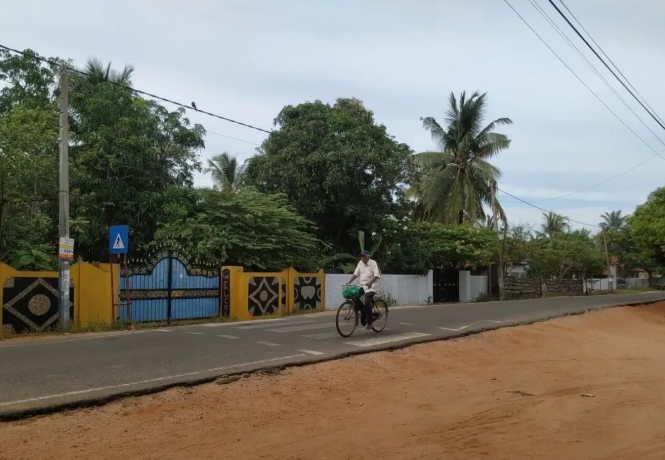
There is no nightlife in Mannar, and the shops facing the street close early. Compared with the tourist cities with an endless stream of tourists, it is more like a small town where locals live quietly.
I found an inn not far from the station. The condition is average, but the price is quite cheaper than what I saw online.
After putting down my luggage, I went to find something to eat. Fortunately, there was another shop that wasn’t completely closed. I bought water and hurried back.
First night in Mannar, hurried and tired.
The landscape in the north and south of Sri Lanka is very different. For some reason in the past, very few tourists came here.
But I still think the north is worth visiting-the beliefs here are different from those in the south, and the architectural style is more vivid and lively because of it.
There isn’t much information about Mannar online. I only learned about this place when I saw a copy of Lonely Planet on the bookshelf of a youth hostel in Kandy.
Facts have proved that the old travel guide is still reliable, and it is worthy of the experience of the predecessors on the spot.
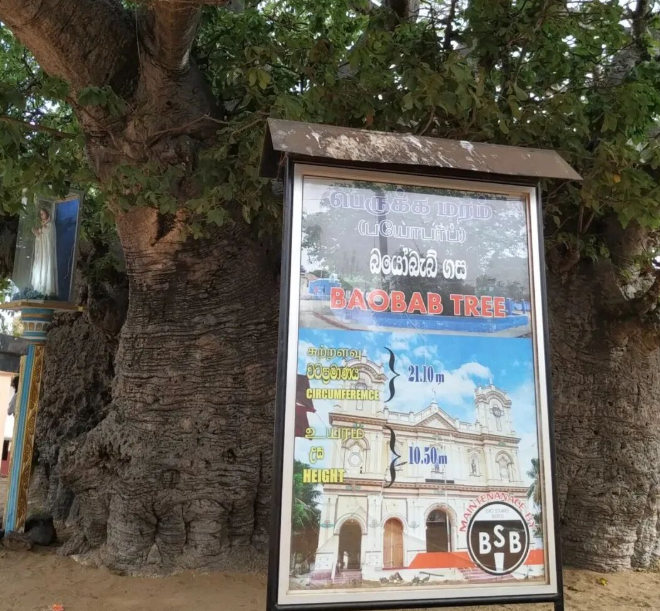
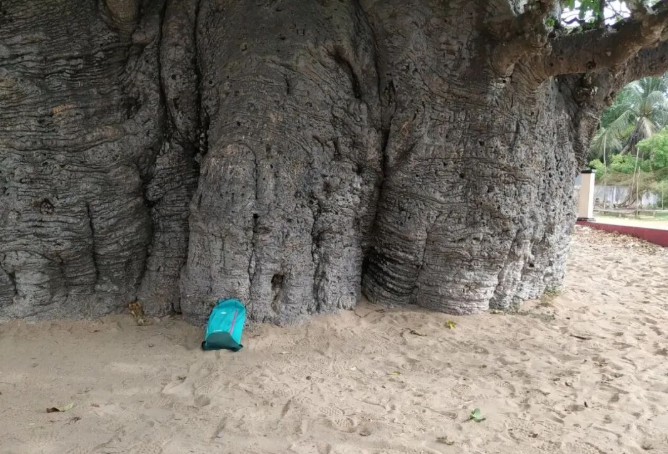
The baobab tree in Mannar is on the side of the road. It is very old, and its trunk is too thick for dozens of people to hold it.
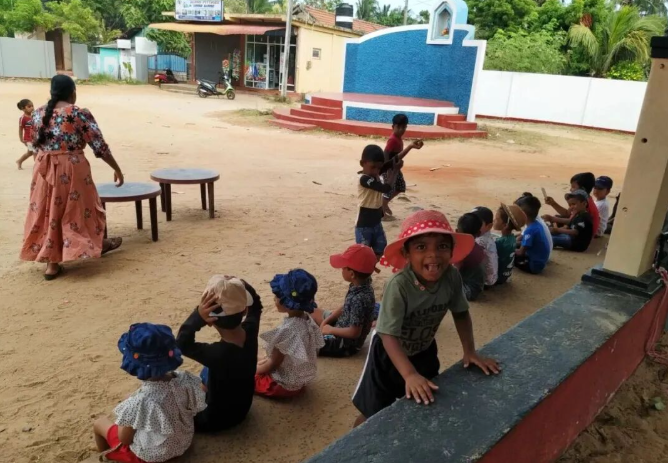
The side of the tree is asphalt. On the day we arrived, there was a teacher dancing under the tree with a group of kindergarten-age children.
Children look at us tourists curiously, and the baobab tree, which is novel in the eyes of tourists, is just a part of daily life for them.
There is a circle of sand around the baobab tree, which is very soft to step on.
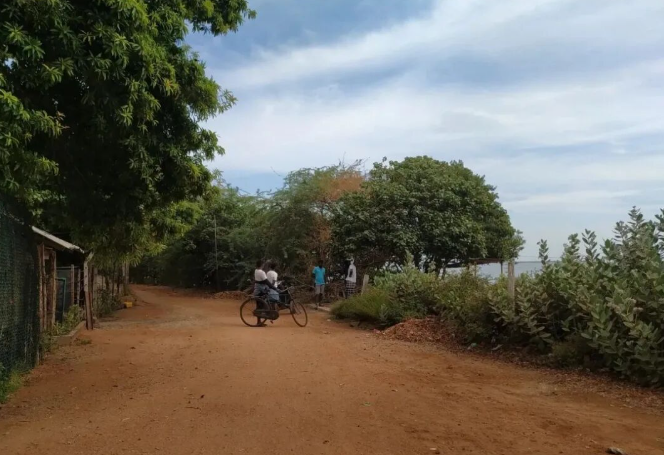
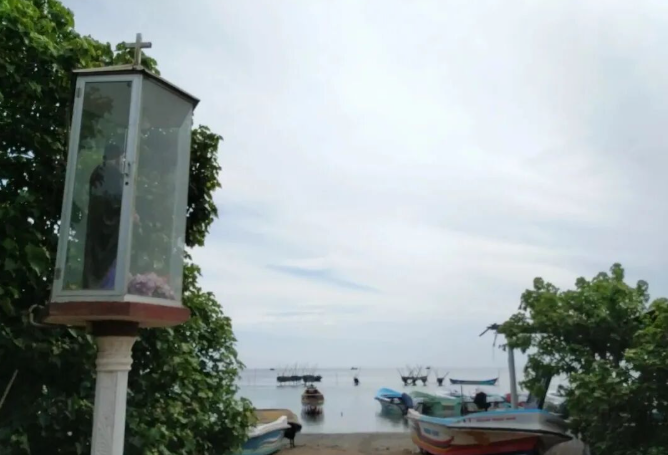
At the end of that asphalt road is the sea, and many fishermen are collecting their nets. As I walked along, I didn’t know where a little yellow dog followed me, and then I was scared away by the dog raised by fishermen on the seaside.
Actually, I wanted to sit at the seaside for a while, but I was afraid that the two groups of dogs would fight, so I had to hurry back.
On the way to the baobab tree, we walked through the village and saw a temple under construction. The door actually said “Donkeys and puppies are not allowed”.
I looked at the donkeys who had slipped in earlier than us, and thought to myself that the word donkey and puppy couldn’t understand either.
Someone was burning incense in the temple early in the morning. Someone saw us looking outside the door and invited us in for a tour.
Everything about Mannar is like a painting, completely irrelevant to the words “tourist attractions”. This is what local people’s life itself looks like, and it is a unique space away from regular attractions.